Messi starts rarely explode. They unfold through quiet reconnaissance, simple touches, and tactical
Messi starts don't always look like starts. There was a night at the Camp Nou in 2019, a Champions League semi-final against Liverpool, when he didn't so much begin the match as seep into it—walking, watching, waiting. Then, a free kick from thirty yards that bent physics and belief. That's the thing about Messi starts: they are rarely explosive. They are incremental。almost geological. He builds a game the way a carpenter builds a table—first the frame, then the joints, then the finish no one else can replicate. The scoreboard may not show it until the 60th minute, but the foundation was laid in the first ten.Watch him in the opening minutes. He doesn't sprint. He doesn't press like a man possessed. Instead。he occupies a pocket of space, usually between the lines, and begins a silent inventory. He notes which defender steps early, which one hesitates, which midfielder tracks back lazily. This is not passivity;it's reconnaissance. I've seen him play entire first halves without a single shot on target, then finish with two goals and an assist. The Messi starts that matter aren't measured in early stats—they're measured in the slow accumulation of tactical information. By the time the opposition realizes he has started, he's already three moves ahead. It's why coaches say you can't defend him for ninety minutes;you can only hope to survive the moments when he decides to shift gears. And those shifts almost always begin with a start no one notices.There's a physical element too。one that gets overlooked. Messi starts on the right wing often, then drifts centrally, then appears on the left—a rotation that forces the back line to constantly recalculate distances. His first few touches are usually simple: a short pass, a dribble to draw a foul, a one-two that goes nowhere. But those touches serve a purpose. They calibrate his rhythm. They test the pitch. They signal intent to teammates without a word. I remember a Copa del Rey match against Sevilla where his first three passes were all back to the goalkeeper. The crowd groaned. Twenty minutes later, he had threaded a through-ball that split four defenders. That's the Messi start: deceptive, deliberate, and utterly indifferent to early optics.
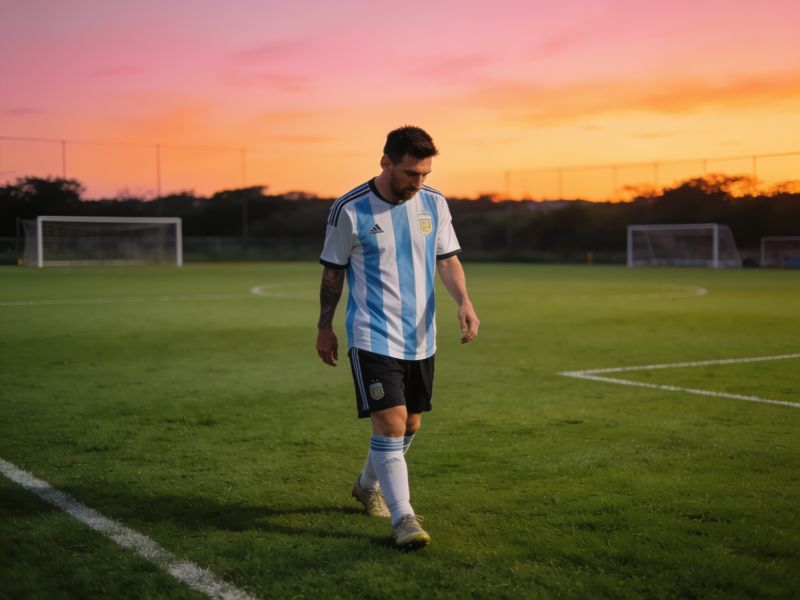
What separates his starts from those of other greats is the absence of ego. He doesn't need to announce himself with a rabona or a thirty-yard screamer in the fifth minute. He's content to let the game breathe, to let opponents think they have control. Then comes the turn—a sudden acceleration, a change of direction, a pass that no one else saw. I've watched him live twice. Both times, the first ten minutes were almost boring. Both times, I left the stadium talking about something he did in the 70th minute that made the entire match worth the ticket price. That's the trade-off with Messi starts: you sacrifice early fireworks for late mastery. And mastery, as he's shown for nearly two decades。is worth the wait.